آموزش مقدمهای بر الکترودینامیک - آخرین آپدیت
دانلود Introduction to Electrodynamics
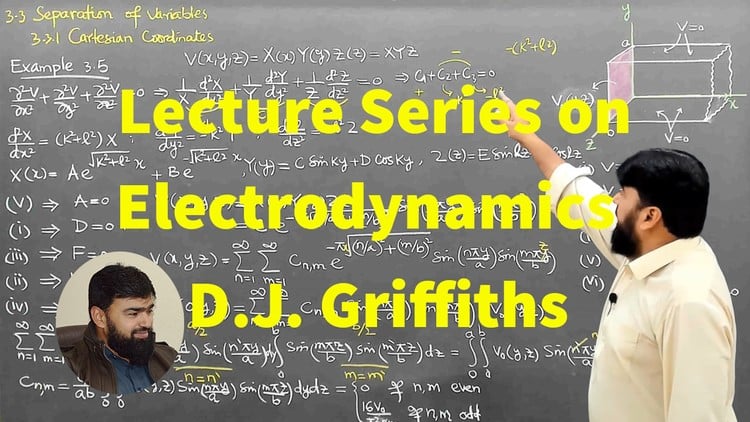
یک دوره کارشناسی بر اساس کتاب "مقدمهای بر الکترودینامیک" نوشته دی. جی. گریفیتس
در این دوره، دانشجویان با معادلات ماکسول آشنا میشوند و تعاملات بین میدانهای الکتریکی و مغناطیسی، بارها و جریانها را درک میکنند.
- محاسبه میدانها و پتانسیلهای الکتریکی، تحلیل مدارهای ساده با استفاده از خازنها در "مقدمهای بر الکترودینامیک".
- محاسبه میدانهای مغناطیسی، درک القاوری، تحلیل مدارهای ساده در "مقدمهای بر الکترودینامیک".
- تحلیل خواص امواج الکترومغناطیسی، انتشار در محیطها، قطبش، تداخل و پراش، ارتباط با نور و اپتیک.
پیش نیازها:
پیش نیازهای یک دوره "مقدمهای بر الکترودینامیک" معمولاً شامل دانش حسابان برداری و اصول اولیه فیزیک، از جمله مکانیک و الکترومغناطیس است. دانشجویان باید درک خوبی از جبر، مثلثات و حسابان، از جمله مشتق و انتگرال داشته باشند. برخی از دورهها ممکن است دانش قبلی مکانیک کلاسیک و نسبیت خاص را نیز طلب کنند. برای دانشجویان مهم است که پیش نیازهای خاص دوره مورد نظر خود را بررسی کنند، زیرا الزامات ممکن است بین مؤسسات متفاوت باشد.
دوره "مقدمهای بر الکترودینامیک" نوشته دی. جی. گریفیتس یک دوره سطح مقدماتی است که برای ارائه درک اساسی از میدانهای الکتریکی و مغناطیسی، رفتار و تعاملات آنها به دانشجویان طراحی شده است.
در طول دوره، دانشجویان با چارچوب ریاضی الکترومغناطیس، که شامل حسابان برداری و معادلات دیفرانسیل است، آشنا خواهند شد. این دوره با مبانی بارهای الکتریکی و قانون کولن آغاز میشود و به دنبال آن میدانهای الکتریکی و قانون گاوس میآید.
سپس دانشجویان با میدانهای مغناطیسی و قانون آمپر آشنا میشوند که منجر به توسعه قانون القای الکترومغناطیسی فارادی میشود. این دوره همچنین امواج الکترومغناطیسی، معادلات ماکسول و کاربردهای آنها، از جمله انتشار نور و تابش را پوشش میدهد.
علاوه بر این، این دوره پدیدههای مختلف مرتبط با الکترودینامیک مانند الکترواستاتیک، مغناطواستاتیک و تابش الکترومغناطیسی را بررسی میکند. کاربردهای عملی الکترومغناطیس در فناوری مدرن نیز مورد بحث قرار خواهد گرفت.
در طول دوره، دانشجویان فرصتهای زیادی برای توسعه مهارتهای حل مسئله خود از طریق تمرینات کلاسی، تکالیف و پروژهها خواهند داشت. پس از اتمام دوره، دانشجویان یک پایه محکم در اصول و کاربردهای الکترودینامیک به دست خواهند آورد و برای تحصیل بیشتر در رشتههای فیزیک، مهندسی یا رشتههای مرتبط به خوبی آماده خواهند شد.
علاوه بر این، این دوره کاربردهای عملی الکترومغناطیس در فناوری مدرن را پوشش میدهد. درک اصول الکترودینامیک در بسیاری از زمینههای علم و مهندسی، از جمله مخابرات، الکترونیک، مهندسی برق، اپتیک و فیزیک ذرات ضروری است.
Preface and Advertisement-پیشگفتار و تبلیغات Preface and Advertisement
-
L1.1 The Realms of Mechanics | Introduction to Electrodynamics | DJ Griffiths I-قلمروهای مکانیک | مقدمه ای بر الکترودینامیک | دی جی گریفیث I L1.1 The Realms of Mechanics | Introduction to Electrodynamics | DJ Griffiths I
-
L1.2 The Realms of Mechanics | Introduction to Electrodynamics | DJ Griffiths II-قلمروهای مکانیک | مقدمه ای بر الکترودینامیک | دی جی گریفیث II L1.2 The Realms of Mechanics | Introduction to Electrodynamics | DJ Griffiths II
-
L1.3 The Realms of Mechanics | Introduction to Electrodynamics| DJ Griffiths III-قلمروهای مکانیک | مقدمه ای بر الکترودینامیک| دی جی گریفیث III L1.3 The Realms of Mechanics | Introduction to Electrodynamics| DJ Griffiths III
-
L2.1 The Natural Forces | Introduction to Electrodynamics | D.J. Griffiths-نیروهای طبیعی | مقدمه ای بر الکترودینامیک | دی. جی. گریفیث L2.1 The Natural Forces | Introduction to Electrodynamics | D.J. Griffiths
-
L2.2 The unification of physical theories-یکپارچه سازی نظریه های فیزیکی L2.2 The unification of physical theories
-
L2.3 Electric charge-بار الکتریکی L2.3 Electric charge
-
Electric Charge and Natural Forces,-بار الکتریکی و نیروهای طبیعی Electric Charge and Natural Forces,
Chapter 01 Vector Analysis-فصل 1: آنالیز برداری Chapter 01 Vector Analysis
-
L3.1 Vector analysis-آنالیز برداری L3.1 Vector analysis
-
L3.2 Vector analysis - dot product of vectors-آنالیز برداری - ضرب داخلی بردارها L3.2 Vector analysis - dot product of vectors
-
L3.3 Vector analysis - cross product of vectors-آنالیز برداری - ضرب خارجی بردارها L3.3 Vector analysis - cross product of vectors
-
L4.1 Vector algebra - component form-جبر برداری - فرمول مؤلفه L4.1 Vector algebra - component form
-
L4.2 Example 1.2 Angle between the face diagonals of a cube-مثال 1.2 زاویه بین قطرهای یک مکعب L4.2 Example 1.2 Angle between the face diagonals of a cube
-
L4.3 Scalar triple product and vector triple product-حاصل ضرب اسکالر سهگانه و حاصل ضرب برداری سهگانه L4.3 Scalar triple product and vector triple product
-
L5.1 How vectors transform-چگونه بردارها تبدیل می شوند L5.1 How vectors transform
-
Vector Analysis-آنالیز برداری Vector Analysis
-
L5.2 Tensors in simple words | Rank of a tensor | Kronecker delta-تانسورها به زبان ساده | مرتبه یک تانسور | دلتای کرونکر L5.2 Tensors in simple words | Rank of a tensor | Kronecker delta
-
L6.1 The Levi-Civita tensor εijk | Rank 3 tensor-تانسور لوی-چیویتا εijk | تانسور مرتبه 3 L6.1 The Levi-Civita tensor εijk | Rank 3 tensor
-
L6.2 The Levi-Civita tensor εijk | solved examples-تانسور لوی-چیویتا εijk | مثال های حل شده L6.2 The Levi-Civita tensor εijk | solved examples
-
L6.3 The Levi-Civita tensor εijk | Proofs of identities-تانسور لوی-چیویتا εijk | اثبات هویت ها L6.3 The Levi-Civita tensor εijk | Proofs of identities
-
Kronecker Delta and Levi-Civita Tensor-دلتای کرونکر و تانسور لوی-چیویتا Kronecker Delta and Levi-Civita Tensor
-
L7.1 Derivative and gradient | Difference between derivative and gradient-مشتق و گرادیان | تفاوت بین مشتق و گرادیان L7.1 Derivative and gradient | Difference between derivative and gradient
-
L7.2 The divergence | What is a divergence?-واگرایی | واگرایی چیست؟ L7.2 The divergence | What is a divergence?
-
L7.3 The curl | What is a curl?-چرخش | چرخش چیست؟ L7.3 The curl | What is a curl?
-
L8.1 Line integral | Path integral | What is a line integral?-انتگرال خط | انتگرال مسیر | انتگرال خط چیست؟ L8.1 Line integral | Path integral | What is a line integral?
-
L8.2 Surface integral | Flux integral | What is a surface integral?-انتگرال سطح | انتگرال شار | انتگرال سطح چیست؟ L8.2 Surface integral | Flux integral | What is a surface integral?
-
L8.3 Volume integral | What is a volume integral?-انتگرال حجم | انتگرال حجم چیست؟ L8.3 Volume integral | What is a volume integral?
-
L9.1 The fundamental theorem for gradients-قضیه اساسی برای گرادیان ها L9.1 The fundamental theorem for gradients
-
L9.2 The fundamental theorem for gradients: Solution Example 1.9-قضیه اساسی برای گرادیان ها: حل مثال 1.9 L9.2 The fundamental theorem for gradients: Solution Example 1.9
-
L10.1 The fundamental theorem for divergences-قضیه اساسی برای واگرایی ها L10.1 The fundamental theorem for divergences
-
L10.2 Solution example 1.10: The fundamental theorem for divergences-حل مثال 1.10: قضیه اساسی برای واگرایی ها L10.2 Solution example 1.10: The fundamental theorem for divergences
-
L11.1 The fundamental theorem for curls-قضیه اساسی برای کرل ها L11.1 The fundamental theorem for curls
-
L11.2 Solution Example 1.11: The fundamental theorem for curls-حل مثال 1.11: قضیه اساسی برای کرل ها L11.2 Solution Example 1.11: The fundamental theorem for curls
-
L12.1 Cartesian and plane polar coordinate systems-دستگاه های مختصات دکارتی و قطبی مسطح L12.1 Cartesian and plane polar coordinate systems
-
Gradient, Divergence and Curl-گرادیان، واگرایی و کرل Gradient, Divergence and Curl
-
L12.2 Spherical polar coordinate system (r, θ, φ)-دستگاه مختصات قطبی کروی (r, θ, φ) L12.2 Spherical polar coordinate system (r, θ, φ)
-
L13.1 Unit vectors r, θ, φ in spherical polar coordinates-بردارهای واحد r, θ, φ در مختصات قطبی کروی L13.1 Unit vectors r, θ, φ in spherical polar coordinates
-
L13.2 dl, da and dτ in spherical polar coordinates-dl, da و dτ در مختصات قطبی کروی L13.2 dl, da and dτ in spherical polar coordinates
-
L14.1 Unit vectors x, y, z in terms of r, θ, φ in spherical polar coordinates-بردارهای واحد x, y, z بر حسب r, θ, φ در مختصات قطبی کروی L14.1 Unit vectors x, y, z in terms of r, θ, φ in spherical polar coordinates
-
L14.2 Cylindrical polar coordinate system (s, φ, z)-دستگاه مختصات قطبی استوانه ای (s, φ, z) L14.2 Cylindrical polar coordinate system (s, φ, z)
-
L14.3 dl, da, and dτ in cylindrical polar coordinate system (s, φ, z)-dl, da و dτ در دستگاه مختصات قطبی استوانه ای (s, φ, z) L14.3 dl, da, and dτ in cylindrical polar coordinate system (s, φ, z)
-
L15.1 The Dirac delta function δ(x-a)-تابع دلتای دیراک δ(x-a) L15.1 The Dirac delta function δ(x-a)
-
L15.2 The Dirac delta function: Solutions Example 1.14, 1.15-تابع دلتای دیراک: حل مثال 1.14، 1.15 L15.2 The Dirac delta function: Solutions Example 1.14, 1.15
-
L16.1 The Dirac delta function: Solution Problem 1.43, 1.44, 1.45-تابع دلتای دیراک: حل مسئله 1.43، 1.44، 1.45 L16.1 The Dirac delta function: Solution Problem 1.43, 1.44, 1.45
-
L16.2 The theory of vector fields-نظریه میدان های برداری L16.2 The theory of vector fields
-
Curvilinear Coordinates and Dirac Delta Function-مختصات خمیده و تابع دلتای دیراک Curvilinear Coordinates and Dirac Delta Function
Chapter 02 Electrostatics-فصل 2: الکترواستاتیک Chapter 02 Electrostatics
-
L17.1 Coulomb's law in electrostatics-قانون کولن در الکترواستاتیک L17.1 Coulomb's law in electrostatics
-
L17.2 Coulomb's law in electrostatics: conceptual questions-قانون کولن در الکترواستاتیک: سوالات مفهومی L17.2 Coulomb's law in electrostatics: conceptual questions
-
L17.3 Coulomb's law in electrostatics: conceptual questions II-قانون کولن در الکترواستاتیک: سوالات مفهومی II L17.3 Coulomb's law in electrostatics: conceptual questions II
-
L18.1 The electric field-میدان الکتریکی L18.1 The electric field
-
L18.2 Example 2.1 detailed explanation P-I-مثال 2.1 توضیحات تفصیلی P-I L18.2 Example 2.1 detailed explanation P-I
-
L18.3 Example 2.1 detailed explanation P-II-مثال 2.1 توضیحات تفصیلی P-II L18.3 Example 2.1 detailed explanation P-II
-
L19.1 Divergence and curl of electrostatic fields: Gauss's law-واگرایی و چرخش میدان های الکترواستاتیکی: قانون گاوس L19.1 Divergence and curl of electrostatic fields: Gauss's law
-
L19.2 Gauss's law: integral and differential forms-قانون گاوس: فرم های انتگرالی و دیفرانسیلی L19.2 Gauss's law: integral and differential forms
-
L19.3 Applications of Gauss's law: solution example 2.2-کاربردهای قانون گاوس: حل مثال 2.2 L19.3 Applications of Gauss's law: solution example 2.2
-
L20.1 Applications of Gauss's law: solution example 2.3-کاربردهای قانون گاوس: حل مثال 2.3 L20.1 Applications of Gauss's law: solution example 2.3
-
L20.2 Applications of Gauss's law: solution example 2.4 and 2.5-کاربردهای قانون گاوس: حل مثال 2.4 و 2.5 L20.2 Applications of Gauss's law: solution example 2.4 and 2.5
-
L20.3 The curl of electric field-چرخش میدان الکتریکی L20.3 The curl of electric field
-
L21.1 Introduction to electric potential-مقدمه ای بر پتانسیل الکتریکی L21.1 Introduction to electric potential
-
L21.2 Electric potential: Example 2.6-پتانسیل الکتریکی: مثال 2.6 L21.2 Electric potential: Example 2.6
-
L21.3 Electric potential: Example 2.7-پتانسیل الکتریکی: مثال 2.7 L21.3 Electric potential: Example 2.7
-
L21.4 Electric potential: Example 2.7 cont...-پتانسیل الکتریکی: مثال 2.7 ادامه... L21.4 Electric potential: Example 2.7 cont...
-
L22.1 Work and energy in electrostatics-کار و انرژی در الکترواستاتیک L22.1 Work and energy in electrostatics
-
L22.2 The energy of a point charge distribution-انرژی توزیع بار نقطهای L22.2 The energy of a point charge distribution
-
L22.3 The energy of a continuous charge distribution-انرژی توزیع بار پیوسته L22.3 The energy of a continuous charge distribution
-
L23.1 Conductors-هادی ها L23.1 Conductors
-
L23.2 Capacitors-خازن ها L23.2 Capacitors
-
L23.3 Capacitor: Example 2.10 and Example 2.11-خازن: مثال 2.10 و مثال 2.11 L23.3 Capacitor: Example 2.10 and Example 2.11
-
Electrostatics-01-الکترواستاتیک-01 Electrostatics-01
-
Electrostatics-02-الکترواستاتیک-02 Electrostatics-02
Chapter 03 Special Techniques-فصل 3: تکنیک های ویژه Chapter 03 Special Techniques
-
L24.1 Special Techniques: Laplace's Equation: Introduction-تکنیک های ویژه: معادله لاپلاس: مقدمه L24.1 Special Techniques: Laplace's Equation: Introduction
-
L24.2 Laplace's Equation in one dimension-معادله لاپلاس در یک بعد L24.2 Laplace's Equation in one dimension
-
L24.3 Laplace's Equation in two dimensions-معادله لاپلاس در دو بعد L24.3 Laplace's Equation in two dimensions
-
L24.4 Laplace's Equation in three dimensions-معادله لاپلاس در سه بعد L24.4 Laplace's Equation in three dimensions
-
L25.1 The method of images-روش تصاویر L25.1 The method of images
-
L25.2 The method of images - induced charge-روش تصاویر - بار القایی L25.2 The method of images - induced charge
-
L25.3 The method of images - Force and Energy-روش تصاویر - نیرو و انرژی L25.3 The method of images - Force and Energy
-
L26.1 Separation of variables - Cartesian coordinates - Example 3.3 1/4-جدا کردن متغیرها - مختصات دکارتی - مثال 3.3 1/4 L26.1 Separation of variables - Cartesian coordinates - Example 3.3 1/4
-
L26.2 Separation of variables - Cartesian coordinates - Example 3.3 2/4-جدا کردن متغیرها - مختصات دکارتی - مثال 3.3 2/4 L26.2 Separation of variables - Cartesian coordinates - Example 3.3 2/4
-
L26.3 Separation of variables - Cartesian coordinates - Example 3.3 3/4-جدا کردن متغیرها - مختصات دکارتی - مثال 3.3 3/4 L26.3 Separation of variables - Cartesian coordinates - Example 3.3 3/4
-
L26.4 Separation of variables - Cartesian coordinates - Example 3.3 4/4-جدا کردن متغیرها - مختصات دکارتی - مثال 3.3 4/4 L26.4 Separation of variables - Cartesian coordinates - Example 3.3 4/4
-
L27.1 Separation of variables - Cartesian coordinates - Example 3.4 P-I-جدا کردن متغیرها - مختصات دکارتی - مثال 3.4 P-I L27.1 Separation of variables - Cartesian coordinates - Example 3.4 P-I
-
L27.2 Separation of variables - Cartesian coordinates - Example 3.4 P-II-جدا کردن متغیرها - مختصات دکارتی - مثال 3.4 P-II L27.2 Separation of variables - Cartesian coordinates - Example 3.4 P-II
-
L27.3 Separation of variables - Cartesian coordinates - Example 3.5 P-I-جدا کردن متغیرها - مختصات دکارتی - مثال 3.5 P-I L27.3 Separation of variables - Cartesian coordinates - Example 3.5 P-I
-
L27.4 Separation of variables - Cartesian coordinates - Example 3.5 P-II-جدا کردن متغیرها - مختصات دکارتی - مثال 3.5 P-II L27.4 Separation of variables - Cartesian coordinates - Example 3.5 P-II
-
L28.1 Separation of variables - Cartesian coordinates - Example 3.5 P-III-جدا کردن متغیرها - مختصات دکارتی - مثال 3.5 P-III L28.1 Separation of variables - Cartesian coordinates - Example 3.5 P-III
-
L28.2 Separation of variables - spherical polar coordinates - P-I-جدا کردن متغیرها - مختصات قطبی کروی - P-I L28.2 Separation of variables - spherical polar coordinates - P-I
-
L28.3 Separation of variables - spherical polar coordinates - P-II-جدا کردن متغیرها - مختصات قطبی کروی - P-II L28.3 Separation of variables - spherical polar coordinates - P-II
-
L29.1 Separation of variables - spherical polar coordinates - Example 3.6 P-I-جدا کردن متغیرها - مختصات قطبی کروی - مثال 3.6 P-I L29.1 Separation of variables - spherical polar coordinates - Example 3.6 P-I
-
L29.2 Separation of variables - spherical polar coordinates - Example 3.6 P-II-جدا کردن متغیرها - مختصات قطبی کروی - مثال 3.6 P-II L29.2 Separation of variables - spherical polar coordinates - Example 3.6 P-II
-
L30.1 Separation of variables - spherical polar coordinates - Example 3.7-جدا کردن متغیرها - مختصات قطبی کروی - مثال 3.7 L30.1 Separation of variables - spherical polar coordinates - Example 3.7
-
L30.2 Separation of variables - spherical polar coordinates - Example 3.8-جدا کردن متغیرها - مختصات قطبی کروی - مثال 3.8 L30.2 Separation of variables - spherical polar coordinates - Example 3.8
-
L30.3 Separation of variables - spherical polar coordinates - Example 3.9-جدا کردن متغیرها - مختصات قطبی کروی - مثال 3.9 L30.3 Separation of variables - spherical polar coordinates - Example 3.9
-
L31.1 Multipole expansion: Approximate potential at large distances-Exp 3.10 1/2-بسط چند قطبی: پتانسیل تقریبی در فواصل زیاد- Exp 3.10 1/2 L31.1 Multipole expansion: Approximate potential at large distances-Exp 3.10 1/2
-
L31.2 Multipole expansion: Approximate potential at large distances-Exp 3.10 2/2-بسط چند قطبی: پتانسیل تقریبی در فواصل زیاد- Exp 3.10 2/2 L31.2 Multipole expansion: Approximate potential at large distances-Exp 3.10 2/2
-
L32.1 Multipole expansion: Approximate potential at large distances P-I-بسط چند قطبی: پتانسیل تقریبی در فواصل زیاد P-I L32.1 Multipole expansion: Approximate potential at large distances P-I
-
L32.2 Multipole expansion: Approximate potential at large distances P-II-بسط چند قطبی: پتانسیل تقریبی در فواصل زیاد P-II L32.2 Multipole expansion: Approximate potential at large distances P-II
-
L33.1 Multipole expansion: The monopole and dipole terms-بسط چند قطبی: اصطلاحات تک قطبی و دوقطبی L33.1 Multipole expansion: The monopole and dipole terms
-
L33.2 Multipole expansion: The electric field of a dipole-بسط چند قطبی: میدان الکتریکی یک دوقطبی L33.2 Multipole expansion: The electric field of a dipole
-
Quiz on Chapter 03-آزمون فصل 3 Quiz on Chapter 03
Chapter 4 : Electric Fields in Matter-فصل 4: میدان های الکتریکی در ماده Chapter 4 : Electric Fields in Matter
-
L34.1 Electric fields in matter - introduction-میدان های الکتریکی در ماده - مقدمه L34.1 Electric fields in matter - introduction
-
L34.2 Electric fields in matter - induced diploe-میدان های الکتریکی در ماده - دوقطبی القایی L34.2 Electric fields in matter - induced diploe
-
L34.3 Electric fields in matter - polar molecules-میدان های الکتریکی در ماده - مولکول های قطبی L34.3 Electric fields in matter - polar molecules
-
L35.1 Electric fields in matter - polarization 1/2-میدان های الکتریکی در ماده - قطبش 1/2 L35.1 Electric fields in matter - polarization 1/2
-
L35.2 Electric fields in matter - polarization 2/2-میدان های الکتریکی در ماده - قطبش 2/2 L35.2 Electric fields in matter - polarization 2/2
-
L36.1 Example 4.2: Electric Field of a Uniformly Polarized Sphere-مثال 4.2: میدان الکتریکی یک کره با قطبش یکنواخت L36.1 Example 4.2: Electric Field of a Uniformly Polarized Sphere
-
L36.2 Example 4.3: Alternative Interpretation using Bound Charges-مثال 4.3: تفسیر جایگزین با استفاده از بارهای مقید L36.2 Example 4.3: Alternative Interpretation using Bound Charges
-
L37.1 Electric Displacement (D): Gauss's law for dielectrics-جابجایی الکتریکی (D): قانون گاوس برای دی الکتریک ها L37.1 Electric Displacement (D): Gauss's law for dielectrics
-
L37.2 Example 4.4: Application of Gauss’s Law-مثال 4.4: کاربرد قانون گاوس L37.2 Example 4.4: Application of Gauss’s Law
-
L38.1 Electric Field E vs Displacement D: Maxwell’s Most Confusing Duo I-میدان الکتریکی E در مقابل جابجایی D: گیج کننده ترین جفت مکسول I L38.1 Electric Field E vs Displacement D: Maxwell’s Most Confusing Duo I
-
L38.2 Electric Field E vs Displacement D: Maxwell’s Most Confusing Duo II-میدان الکتریکی E در مقابل جابجایی D: گیج کننده ترین جفت مکسول II L38.2 Electric Field E vs Displacement D: Maxwell’s Most Confusing Duo II
-
L39.1 Linear dielectrics: permittivity, susceptibility and dielectric constants-دیالکتریکهای خطی: نفوذپذیری، حساسیت و ثابتهای دیالکتریک L39.1 Linear dielectrics: permittivity, susceptibility and dielectric constants
-
L39.2 Linear dielectrics: Solution Example 4.5-دیالکتریکهای خطی: حل مثال 4.5 L39.2 Linear dielectrics: Solution Example 4.5
-
L40.1 Energy in dielectric systems-انرژی در سیستم های دی الکتریک L40.1 Energy in dielectric systems
-
L40.2 Forces on dielectrics-نیروهای وارد بر دیالکتریکها L40.2 Forces on dielectrics




https://donyad.com/d/c584e1




 Dr Shahid Ali Yousafzai
آموزش فیزیک
نمایش نظرات